
The Best Anxiety Journal for Understanding and Managing Anxiety

Anxiety can be difficult to explain, even to yourself. Thoughts feel tangled. Emotions feel intense but unclear. Physical sensations appear without warning. Many people know they feel anxious but struggle to understand why, where it came from, how to deal with it and overcome it!
I'm one of those people myself. After living with anxiety disorder for nearly 20 years and boxing myself in, enough was enough. So this is me, telling you what worked for me and how I've gone on to create that for other people.
An anxiety journal is not about writing perfectly or forcing positivity. It is about slowing things down enough to understand what is happening inside your mind and body. When anxiety feels overwhelming, clarity is often the first step toward relief.
I created the Discovery Journal with this exact purpose in mind. It is not a notebook. It is a guided anxiety journal designed to help people explore thoughts, emotions, and patterns safely and honestly.
I'm new to the world of journals but this is so straightforward. I've been using it since it arrived and I can already feel a difference. My mind feels lighter. My family have said they even notice a difference in me. Would highly recommend for anyone experiencing problems with their mental health.
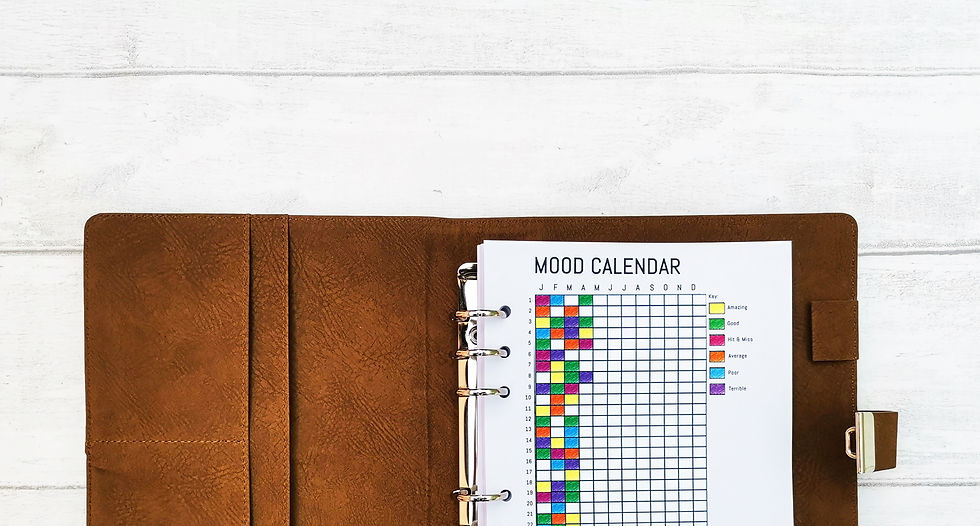
Why anxiety journaling helps
Anxiety thrives on speed and uncertainty. Thoughts jump ahead. The body reacts before the mind catches up, and an anxious mind will pick the easiest possible explanation for your reaction...often this is wrong. Journaling interrupts that cycle.
When you write, your nervous system slows. Thoughts that feel chaotic begin to take shape. Emotions that feel overwhelming become more manageable once they are named.
Research consistently shows that journaling helps anxiety by improving emotional regulation, increasing self-awareness, and reducing rumination.
Writing creates distance between you and anxious thoughts, making them easier to observe rather than react to.
What makes the best anxiety journal
Not all journals are equally helpful for anxiety. Blank pages can sometimes feel intimidating, especially when anxiety is high, and gratitude journals can apply too much toxic positivity if you are in a fragile state of mind. A truly supportive anxiety journal offers guidance without pressure.
The best anxiety journal should help you:
understand emotional patterns
Identify anxiety triggers
reflect without judgement
express feelings clearly
feel supported rather than overwhelmed
be flexible
This is where the Discovery Journal stands out.

Designed specifically for emotional awareness and mental health reflection. Rather than focusing on productivity or forced gratitude, it encourages honest exploration and helps build patterns so you can see where the anxiety is being triggered and follow that path backwards to find the cause.
The journal guides you to reflect on how anxiety shows up in your body, your thoughts, and your daily life. It helps you notice patterns without labelling them as problems.
For people with anxiety, this approach feels safer. There is no pressure to fix yourself. The focus is understanding.
I've been struggling for a couple of years and wanted a diary to keep track of how I'm feeling and this is perfect! I've only just started it but I can already notice things which I didn't pick up on before. I've noticed it's easy to forget the good days when things are bad but the diary's a reminder that there are also good days and that's a good reminder to have. Would highly recommend for anyone struggling!
Emotional literacy and anxiety
Many people struggle with anxiety because they lack emotional language. Everything feels intense but vague. This often leads to frustration or self-criticism.
Anxiety journaling improves emotional literacy. It helps you name emotions accurately rather than lumping everything under stress or panic.
The Discovery Journal actively encourages emotional expression and vocabulary expansion. This makes it easier to recognise subtle emotional changes before they escalate.
When emotions are named, they become easier to regulate.
Anxiety is not just thoughts

One of the biggest mistakes people make when trying to manage anxiety is focusing only on thoughts. Anxiety is also physical and emotional.
The Discovery Journal includes prompts that encourage you to notice physical sensations, emotional shifts, and environmental triggers. This whole body awareness is essential for long-term anxiety support.
By understanding how anxiety moves through your body, it becomes less frightening and more familiar.
Journaling helps reduce reassurance seeking
Anxiety often creates a need for reassurance. You want certainty. You want someone to tell you that you are okay.
Journaling offers internal reassurance, and writing allows you to process fears privately rather than seeking constant external validation.
Over time, this builds trust in your own ability to cope and enhances your own self-confidence.
Many people find that regular anxiety journaling reduces checking behaviours, rumination, and spiralling.
How to use an anxiety journal consistently
You do not need to journal every day for it to help; the Discovery Journal is DELIBERATELY not dated. Consistency matters more than frequency, and feeling pressured into completing it every day is counterproductive to mental health.
Some people write in their anxiety journal daily. Others use it during anxious periods or emotional transitions. Both approaches are valid.
This flexibility makes it sustainable for people living with anxiety.
Anxiety journaling during recovery

For people recovering from mental health difficulties, journaling can provide continuity and grounding. It helps track emotional progress that may not be obvious day to day.
Recovery is rarely linear. Anxiety fluctuates. Journaling captures those changes without judgment. I still have days when I am overcome with anxiety, and I always think to myself, "How did I feel like this every day and still cope?" Although I'm much better than I have ever been, I am also aware that anxiety can creep up on me again.
It's worth continuing to journal even after you start feeling better as a wellness practice.
Who the Discovery Journal is for
The Discovery Journal works especially well for:
people experiencing anxiety or panic
those who overthink or ruminate
individuals in therapy or recovery
people who struggle to express emotions
Anyone seeking emotional clarity
It is suitable whether anxiety is mild or more persistent.
Why this anxiety journal feels different
Many anxiety journals focus on coping strategies alone. While tools are helpful, they are not enough without understanding.
The Discovery Journal prioritises insight, logic and understanding. It helps you understand why anxiety shows up, not just how to distract from it.
This makes coping strategies more effective because they are used intentionally rather than reactively.


Comments