
Anxiety Body Symptoms and How to Feel Safe in Your Body Again

One of the most unsettling things about anxiety is how physical it can feel.
People often expect anxiety to stay in the mind, but for many, the body is where it becomes impossible to ignore.
Your chest feels tight. Your stomach feels unsettled. Your muscles ache with tension. Your heart suddenly becomes something you are constantly aware of.
And after a while, you stop trusting your body.
Instead of feeling like somewhere safe to exist, your body begins to feel unpredictable, uncomfortable, or constantly “on edge.”
This is one of the reasons anxiety becomes so exhausting. You are not only trying to manage your thoughts, but you are also trying to manage physical sensations too.
But anxiety body symptoms are incredibly common, and understanding them is one of the first steps toward feeling safer in yourself again.
Why Anxiety Shows Up in the Body
Anxiety is a nervous system response.
When your brain senses stress or danger, your body prepares to protect you. This activates physical changes designed for survival.
Your heart beats faster to move blood more quickly. Your breathing changes to increase oxygen intake. Your muscles tense in preparation for action.
In genuine danger, these responses are useful.
The problem is that modern anxiety often activates the same system even when there is no immediate physical threat.
Your body reacts first, even if logically you know you are safe, making everything far more confusing and unpredictable.

Common Anxiety Body Symptoms
Anxiety can affect almost every part of the body.
Some of the most common symptoms include:
chest tightness
racing heart
dizziness
muscle tension
headaches
digestive discomfort
nausea
tingling sensations
shallow breathing
fatigue
The intensity of these symptoms often makes people worry that something serious is wrong.

And while it is always important to seek medical advice when needed, many physical symptoms are directly linked to prolonged stress and nervous system activation. It can be difficult to know the difference between illness and anxiety, which is why Discovery Journals can help. They are specifically designed to help find triggers and causes of anxiety by tracking the body's symptoms, as well as interactions, behaviours and environments.
You can learn more about the Discovery Journal here.
Why Anxiety Makes You Hyper Aware of Your Body
Once anxiety creates physical sensations, your attention naturally moves toward them.
You start noticing:
your heartbeat
your breathing
small sensations you would normally ignore
This is called hypervigilance.
Your brain becomes highly focused on your body because it is trying to monitor for danger, and the more attention you give these sensations, the stronger and more noticeable they often become.
This creates a difficult cycle:
Anxiety creates physical symptoms
Physical symptoms create fear
Fear increases anxiety
Anxiety intensifies symptoms
Breaking this cycle starts with understanding what is happening.
Your Body Is Not Betraying You
A lot of people experiencing anxiety begin feeling frustrated with their bodies.
Why can't I calm down? Why does my chest always feel tight? Why do I feel unsafe all the time?
But your body is not working against you.
It is trying to protect you, in its own funny way.
The issue is not that your body is failing. It is that your nervous system has become overstimulated and stuck in protection mode.
This shift in perspective matters because self-frustration often increases tension further.
Some people experience anxiety in a way that makes them feel detached from their body completely.
Almost numb. Disconnected. Not fully present.
This can happen because when the nervous system becomes overwhelmed, the brain sometimes distances itself emotionally or physically as a coping mechanism.
It can feel frightening, but it is often a stress response rather than something dangerous.
Learning to Feel Safe Again
One of the biggest parts of anxiety recovery is rebuilding trust in your body.
Not fighting every sensation. Not monitoring yourself constantly. Not assuming every feeling means danger.
Instead, slowly teach your nervous system that it does not need to stay in survival mode all the time.
This takes patience and time.
Your body responds more to repeated experiences of safety than to one moment of reassurance. As they say, practice makes perfect. Your brain needs to relearn.
Why Grounding Helps So Much
Grounding works because anxiety often pulls your attention into fear, anticipation, or internal sensations.
Grounding reconnects you to the present moment physically.
Simple grounding techniques include:
noticing your surroundings
focusing on physical sensations like your feet on the floor
holding something textured or cold
slowing your breathing gently
These techniques help signal safety to the nervous system.

Movement Helps Release Stored Tension
Anxiety creates physical tension that often stays trapped in the body.
This is why many anxious people feel:
stiff
restless
physically exhausted
Gentle movement helps release some of that tension.
Walking, stretching, yoga, or even shaking out your arms can help your body complete stress responses instead of holding onto them internally.
The Role of Mental Overload in Physical Anxiety
Your body and mind are deeply connected.
When your thoughts are constantly busy, your body rarely gets a chance to fully relax.
Mental overload keeps the nervous system activated.
This is why emotional stress often shows up physically.
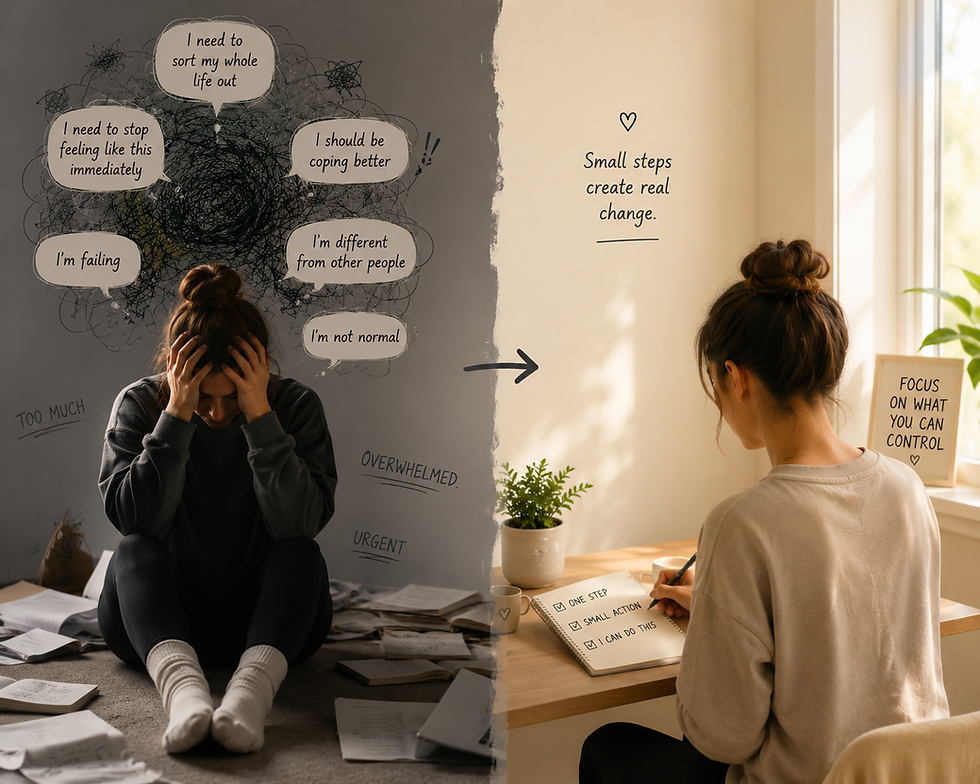
Journaling can help reduce this pressure by giving your thoughts somewhere to go instead of holding everything internally.
Using a structured journal or brain dump pad allows you to release mental clutter before it builds into physical tension.
Many people notice that once their thoughts feel clearer, their body begins settling too.
Why Writing Helps You Reconnect With Yourself
When anxiety is high, people often disconnect from their own emotions and needs.
Journaling creates a moment of pause.
It allows you to ask:
What am I actually feeling right now
What does my body need
What has been building up mentally
This process creates self-awareness without judgment.
Guided prompts can make this easier when your thoughts feel difficult to untangle, helping you process emotions gently instead of keeping everything trapped internally.
Healing Does Not Mean Never Feeling Anxiety Again
A common misconception is that recovery means never experiencing anxiety.
In reality, healing often looks more like:
understanding your body better
responding with less fear
calming yourself more quickly
feeling safer during difficult moments
The goal is not perfection.
The goal is rebuilding trust in yourself and your body over time.


Comments