
Feeling Alone With Anxiety and Why So Many People Feel the Same

One of the hardest parts of anxiety is not always the anxiety itself; it is the feeling that nobody else understands it, understands you.
You can be surrounded by people and still feel completely alone in what you are experiencing. You may smile, go to work, reply to messages, and carry on as normal while internally feeling overwhelmed, exhausted, or mentally consumed.
And because anxiety is often invisible, many people assume they are the only ones struggling this way. But they are not.
In reality, millions of people experience anxiety every day without talking about it openly. The problem is that anxiety often convinces you that your experience is somehow different, more confusing, or harder to explain than everyone else’s.
That isolation can make anxiety feel even heavier.
Feeling Alone With Anxiety: Why Anxiety Feels So Isolating

Anxiety is deeply internal.
A lot of it happens inside your body and mind where nobody else can see it. Unlike physical illness, there is often no obvious outward sign that something feels wrong.
This creates a strange disconnect.
Externally, everything may look fine. Internally, your mind may feel loud, tense, or constantly overwhelmed.
This is one reason people with anxiety often feel misunderstood. They may hear things like: “Just relax.”“You are overthinking.”“Everyone feels stressed.”
Even when these comments are well intentioned, they can make someone feel even more alone because they minimise how intense anxiety actually feels.
The Pressure to Look Okay
Many people become very good at hiding anxiety.
They continue functioning while struggling internally because they do not want to worry others, appear weak, or explain something that feels difficult to describe.
Over time, this creates emotional exhaustion.
You are not just managing anxiety. You are also managing the effort of appearing fine.
This can lead to:
emotional burnout
mental fatigue
disconnection from others
feeling unseen
The more isolated anxiety becomes, the more overwhelming it often feels. The more energy it takes to hide the symptoms of anxiety, the easier it becomes to isolate yourself.
Why It Helps to Know Other People Feel This Too
One of the most powerful things for anxiety is reassurance.
Not reassurance that everything is perfect, but reassurance that:
you are not broken
you are not the only one
what you are feeling is understandable
This changes the experience psychologically.
When anxiety feels unique to you, it feels frightening.
When you realise other people experience similar thoughts, fears, and physical symptoms, it becomes less isolating.
This is one reason communities, shared stories, and open conversations around mental health matter so much.

Anxiety Often Makes People Withdraw
Anxiety has a way of making the world feel smaller.
You may stop replying to messages. Avoid plans. Keep things to yourself.
Not because you do not care about people, but because your nervous system already feels overloaded and you want to avoid dealing with anxiety.
The problem is that isolation tends to increase anxiety further.
Without connection, your thoughts become stronger because there is less external perspective balancing them out.
The Mental Loop of Feeling Alone
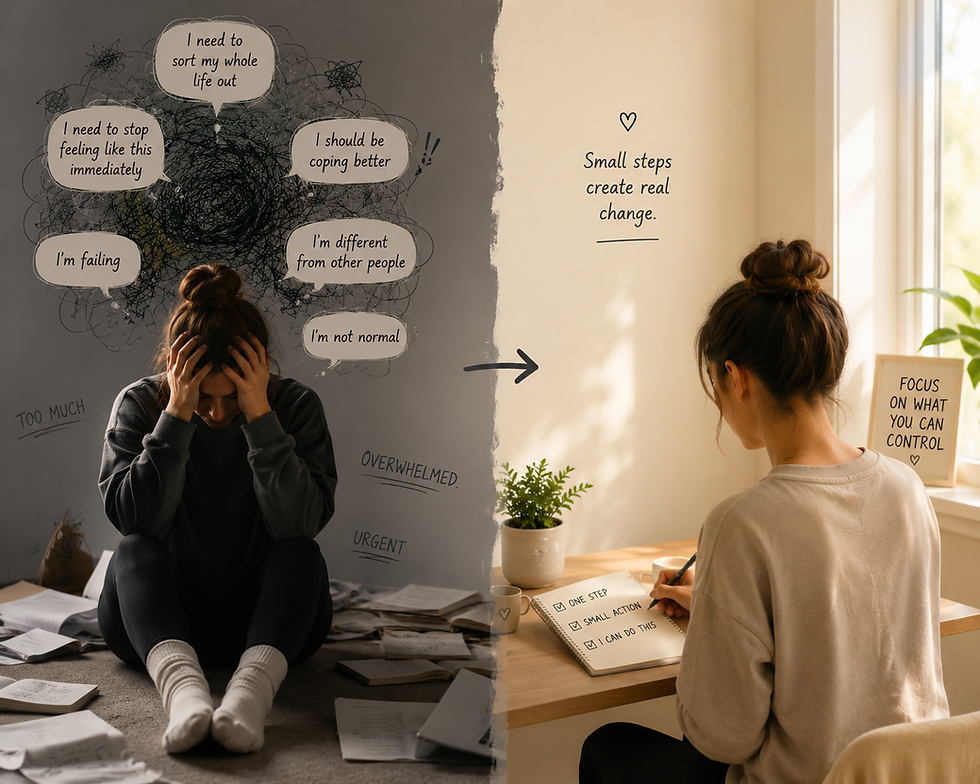
Anxiety often creates repetitive thoughts such as:
nobody understands me
I cannot explain how I feel
everyone else seems to cope better
I should be handling this differently
These thoughts increase shame, which increases isolation and isolation gives anxiety more space to grow. A vicious cycle.
This is why connection is so important in anxiety recovery. Not necessarily large social situations, but moments where you feel understood, safe, or emotionally seen.
Why Writing Can Help When Talking Feels Difficult
Not everyone finds it easy to talk openly about anxiety.
Sometimes thoughts feel too messy, confusing, or emotional to say out loud. Not everyone has brilliant emotional literacy, because we aren't taught it.
Writing can help bridge that gap.
Journaling allows you to:
express thoughts honestly
process emotions privately
understand what you are feeling more clearly
For many people, it is easier to write what they feel before they can speak about it.
Resources such as Discovery Journal can be really helpful, they provide structure as well as purpose, allowing you to simplify journaling and skill feel like you are getting full benefit.
They help find triggers and causes of anxiety, giving you a foundation to work with.
And when you are ready for something I little more challeneging, they offer expansions to help hone your skills or focus on a specific ailment.
Instead of trying to organise your thoughts mentally, you create space for them externally.
Anxiety often feels chaotic because everything stays tangled inside your head.
Once thoughts are written down, they tend to feel:
more manageable
less overwhelming
easier to understand
Even if nothing is “solved,” the emotional intensity often reduces.
This is because your brain no longer has to hold onto everything at once.
You Do Not Need to Explain Yourself Perfectly
A common fear people have is: “What if nobody understands?”
But connection does not require perfect explanation. Anxiety usually thrives off of your confusion, making it harder to explain why it's happening or what is causing it; you may not know yourself!
You do not need to describe anxiety in the “right” way to deserve support.
Even saying: “I am struggling at the moment” is enough. It's a starting point.
Often, the pressure to explain anxiety perfectly creates more stress than the conversation itself.
Small Moments of Connection Matter
Feeling less alone does not always come from huge breakthroughs.
Sometimes it comes from:
reading someone else’s experience
hearing “me too”
talking honestly with one person
understanding your own thoughts more clearly
These small moments reduce the sense of isolation anxiety creates.
If you don't feel comfortable speaking to your friends and family, you can try reaching out to a counsellor or therapist. Sometimes it feels easier when you don't have emotional ties to someone.

Why Anxiety Can Distort Perspective
When anxiety is high, your brain naturally focuses on threat and negativity.
This can make it harder to recognise support, connection, or progress.
You may feel disconnected even around people who care or misunderstood by those closest to you. This can be very confusing. This does not mean those things are true. It means anxiety is shaping your perspective.
Understanding this can help reduce self judgement.
Part of reducing anxiety is learning how to create moments of safety for yourself emotionally.
This might look like:
reducing overstimulation
resting without guilt
writing your thoughts down
speaking kindly to yourself
allowing yourself to slow down
These things may seem small, but they help regulate your nervous system over time.
Discovery Journal can help you find those things! They are designed to spot moments and patterns in your every day life which can be contributing or creating anxiety.

As you can see, these journals break down your day, helping you access trigger points.
You Are More Understood Than You Think
One of the most surprising things people discover when they begin opening up about anxiety is how many others quietly relate.
The thoughts. The overwhelm. The physical symptoms. The exhaustion.
So many people are carrying similar experiences silently.
The difference is that most people hide it well.


Comments